


Chaska sits in the Minnesota River valley, and that geography does something specific to winter. Cold air is denser than warm air — it drains downhill and pools in low-lying areas. The river corridor that gives Chaska its character also means that overnight low temperatures here can run a few degrees colder than surrounding elevated areas, and the cold lingers longer into the morning. When a furnace fails in the valley on a January night, there’s nowhere for that cold to go except into your home.
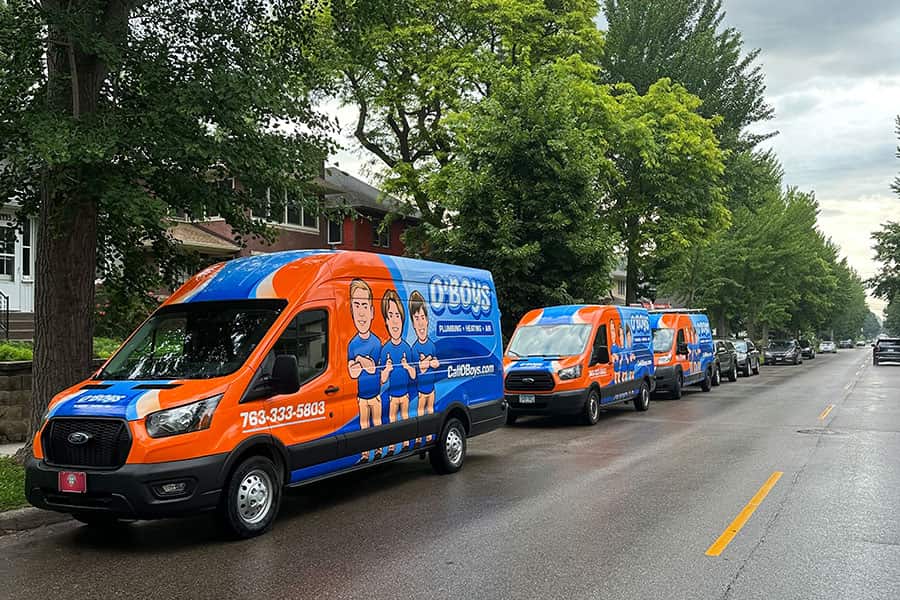
O’Boys Plumbing, Heating & Air offers 24/7 emergency furnace repair in Chaska because we understand what cold-air pooling in a river valley means for a home without heat. Our technicians respond at any hour, arrive equipped for the most common emergency repairs, and focus on restoring heat in a single visit. When your furnace stops working in Chaska, don’t wait — call us and we’ll have someone on the way.
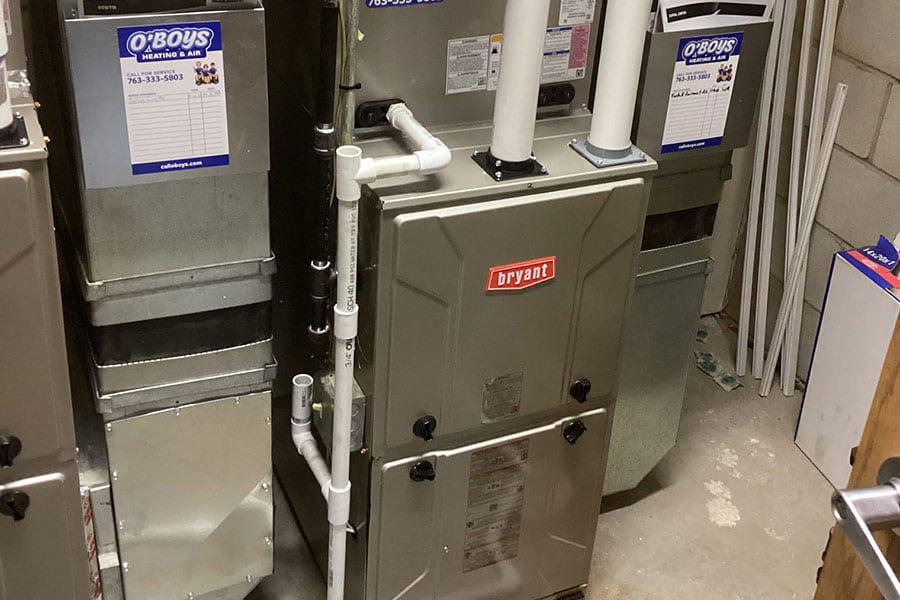
Chaska’s housing includes some of the oldest homes in Carver County — Victorian-era properties near downtown — alongside mid-century construction and the planned Jonathan community neighborhoods that developed from the 1970s onward. That range of home ages means heating system configurations in Chaska vary more than in newer, uniformly developed suburbs. What they share is that many of them are now carrying furnaces that have seen 15 or more Minnesota winters. Those systems communicate when they’re struggling:
A smell of exhaust or combustion products in the living space is the sign that requires the most immediate attention — it can indicate a heat exchanger problem that warrants shutting the system down until a technician has inspected it.
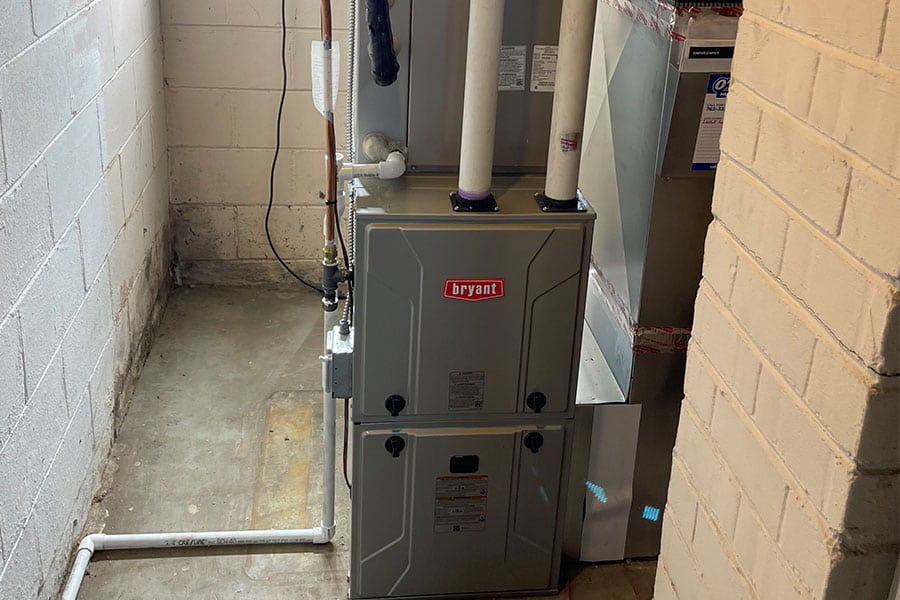
Cold-air drainage into the Minnesota River valley is a well-documented phenomenon that Chaska residents experience every winter without necessarily having a name for it. When regional temperatures drop, the coldest air flows downhill and concentrates in the lowest terrain — which includes significant portions of Chaska’s residential areas. On a night when the regional forecast says 5 degrees, valley-floor neighborhoods in Chaska may see temperatures that feel closer to minus 5 once the drainage effect and wind chill are accounted for.
For a furnace that’s operating with a developing fault, that additional cold load is the difference between struggling through and failing outright. A heat exchanger running at the edge of its tolerance doesn’t hold together as well when the system cycles 30 percent more frequently than it would in a milder environment. A draft inducer motor that’s bearing-worn but technically functional will fail faster when it runs without rest through a sustained cold period. Chaska’s valley position is one of the reasons that prompt furnace repairs — even on symptoms that seem minor — tend to pay off more than they would in a less geographically demanding location.
Greg called us at 11 p.m. on a Wednesday in January from his home in Chaska’s Jonathan neighborhood. The furnace had gone quiet around 9 p.m. and the house was already at 63 degrees when he realized it hadn’t cycled back on. He had two young kids and needed it fixed before morning.
Our technician arrived within the hour. The system had a failed draft pressure switch — a component that confirms proper venting before allowing the burner to ignite. Without a functioning pressure switch, the furnace’s safety controls prevent the burner from firing even though everything else is operational. The switch was replaced, the system was tested through four full heating cycles, and by 1 a.m. the house was back to 70 degrees. Greg’s kids slept through the whole thing. That’s the outcome we work for on every emergency call.
Because Chaska’s river valley position amplifies cold exposure compared to surrounding terrain, a furnace that’s in peak condition going into winter is worth more here than in a higher-elevation suburb. The incremental cold load from valley drainage is the variable that turns a marginal system into a failed one — and it’s the variable that good fall maintenance eliminates as a risk factor. Habits that matter most for Chaska homeowners:
A well-maintained furnace in a Chaska home is one of the most straightforward investments a homeowner can make against the realities of a river valley winter.

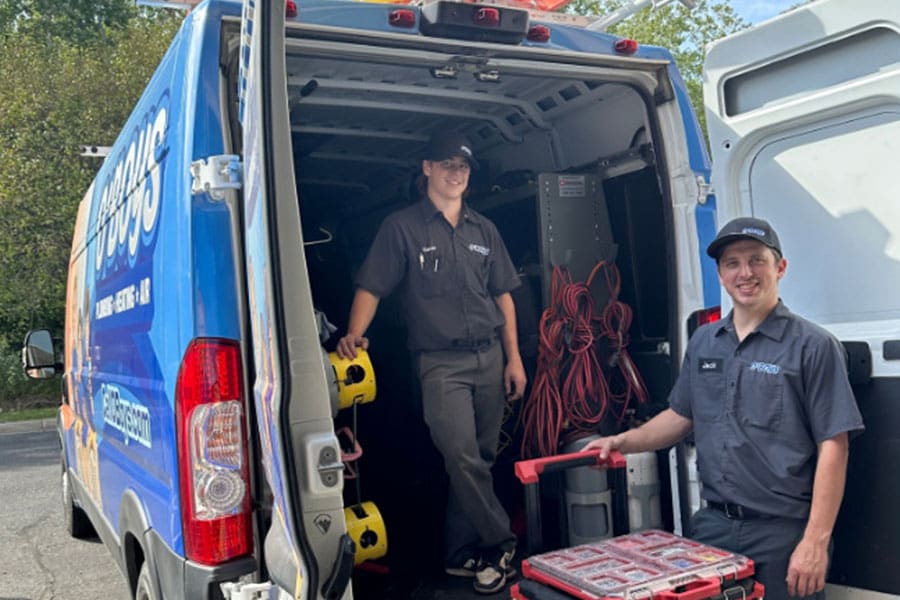
O’Boys Plumbing, Heating & Air has been serving Carver County — including Chaska’s river valley communities — for more than 25 years. We’re a family-owned company, and the way we work reflects that: no inflated estimates, no services pushed on homeowners who don’t need them, and no callbacks on heating emergencies. We show up, we fix the problem, and we stand behind every job.
Chaska homeowners who call O’Boys get:
When your furnace needs attention in Chaska, O’Boys is ready to help. Give us a call any time.
Any persistent smell of combustion byproducts — exhaust, sulfur, or a smell similar to car exhaust — in the living space during furnace operation is a reason to take action immediately. It can indicate a cracked heat exchanger allowing combustion gases to enter the air supply. Turn the furnace off, ventilate the home, test your carbon monoxide detector, and call a technician. Do not continue running the system until it has been inspected.
This is counterintuitive but not unusual. On mild days, the furnace may be overshooting the thermostat set point and then short-cycling — running frequently in short bursts. On colder days, it may simply run longer continuous cycles that feel more stable. Either pattern can indicate a sizing issue or a control problem. A technician can evaluate the system’s actual operation against what the thermostat is requesting.
Most standard repairs — ignitor replacement, flame sensor cleaning, pressure switch replacement, capacitor swap — are completed within one to two hours including diagnosis time. More complex repairs involving the heat exchanger, gas valve, or control board may take longer or require parts to be ordered, depending on the system. A technician will give you a clear timeline after diagnosing the problem.